
Cannabis Software Rankings Should Measure Behavior, Not Feature Lists
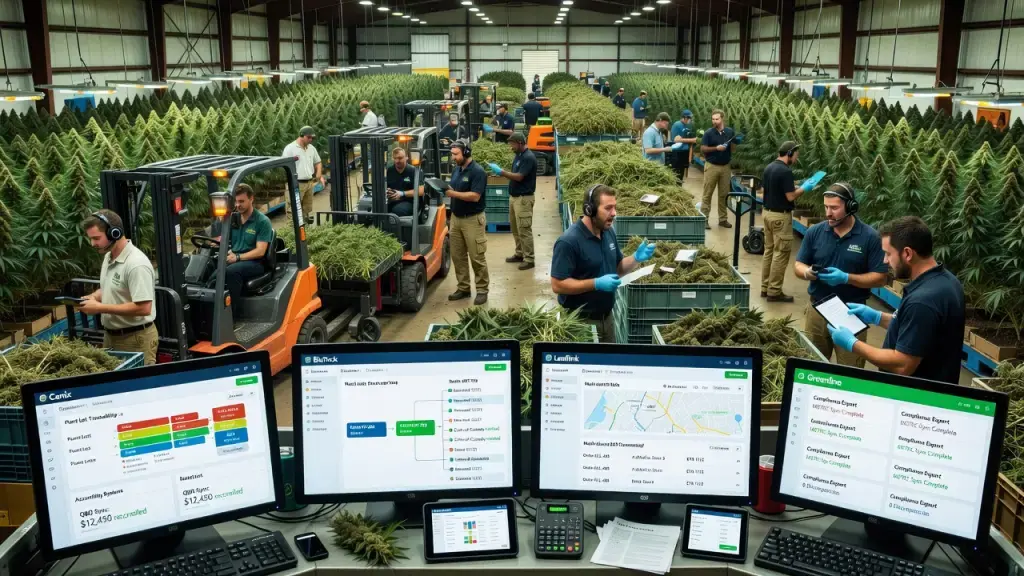
Authored by cannabiscanadabuzz.com, 07 Oct 2026
Most comparisons of cannabis business software read like spec sheets: a grid of checkmarks next to words like "traceability" and "compliance reporting." That approach tells an operator almost nothing about what happens when a multi-location dispensary runs end-of-month reconciliation during a harvest surge, or when a cultivator pushes a thousand plant movements through METRC in a single afternoon. The more useful question isn't whether a platform claims seed-to-sale tracking. It's whether that tracking holds up when batch volume spikes, when staff turnover disrupts data entry discipline, or when an auditor asks for chain-of-custody evidence on short notice.
Why System Behavior Under Load Matters More Than Checklists
Cannabis retail and cultivation operations run on regulatory plumbing that doesn't forgive gaps. METRC integrations, state-mandated inventory adjustments, and audit trail requirements aren't optional add-ons - they're the operational floor. A platform can advertise full traceability and still produce reconciliation mismatches if item and batch setup wasn't handled with real governance discipline from day one. That's the catch with software built around compliance: the tool only performs as well as the data entry culture behind it. Operations managers who've lived through a messy inventory reconciliation know this isn't theoretical. It's a recurring Tuesday afternoon problem.
Where Canix, BioTrack, Greenline, and Leaflink Diverge
Canix positions itself for mid-market operators that need continuity across cultivation, inventory adjustments, and retail sales reporting in one system, with an API-first structure built to feed accounting and ERP workflows. BioTrack leans harder into event-based traceability, which suits operators already running METRC-centric discipline and needing audit trail immutability for chain-of-custody documentation specifically. Leaflink, by contrast, isn't a plant-tracking system at all - it's built around B2B ordering and fulfillment between buyers and sellers, which makes it a fit for multi-store procurement standardization rather than cultivation task tracking. Greenline enters as a lower-cost dispensary POS option that still covers traceability and compliance exports, which matters for smaller operators who don't need the full depth of a mid-market platform but still face the same regulatory reporting obligations.
- Canix: traceability continuity from harvest through retail, with API connections for accounting and ERP systems
- BioTrack: event-based batch and lot lineage with audit trail strength for compliance officer workflows
- Leaflink: B2B order, shipment, and receiving coordination across multi-store procurement
- Greenline: lower-cost dispensary POS with traceability and compliance export support
The Real Tradeoff: Setup Discipline Versus Operational Speed
Here's what the feature-checklist approach misses: every one of these platforms depends on upstream configuration quality. Canix needs disciplined item and batch setup before high-volume operations start, or reporting gaps appear later when they're harder to trace. BioTrack's role-based views can feel complex without clear internal ownership of who manages which event type. Leaflink's order accuracy depends on consistent SKU and lot-level mapping across every receiving location. None of this is a flaw unique to one vendor - it's a structural reality of regulated cannabis software. The tool doesn't replace governance; it encodes whatever governance discipline already exists, for better or worse.
What This Means for Buyers Making a Platform Decision
Technical buyers evaluating cannabis business software should map tool fit to their own engineering and operations constraints, not to a vendor's marketing page. A single-location dispensary with straightforward retail dispensary management needs doesn't require the same depth as a vertically integrated operator managing cultivation, processing, and multi-store distribution under one compliance umbrella. Compliance officers should weigh audit trail assembly speed. Revenue operations teams should weigh reconciliation export quality against their accounting close cycle. Systems integrators should weigh API maturity against the engineering time needed for clean data mapping. The right choice depends less on which platform has more modules and more on which one matches the operational load the business actually carries.