
Khadijah Farrakhan, Nation of Islam's First Lady, Dies at 90
Authored by cannabiscanadabuzz.com, 29 Jun 2026
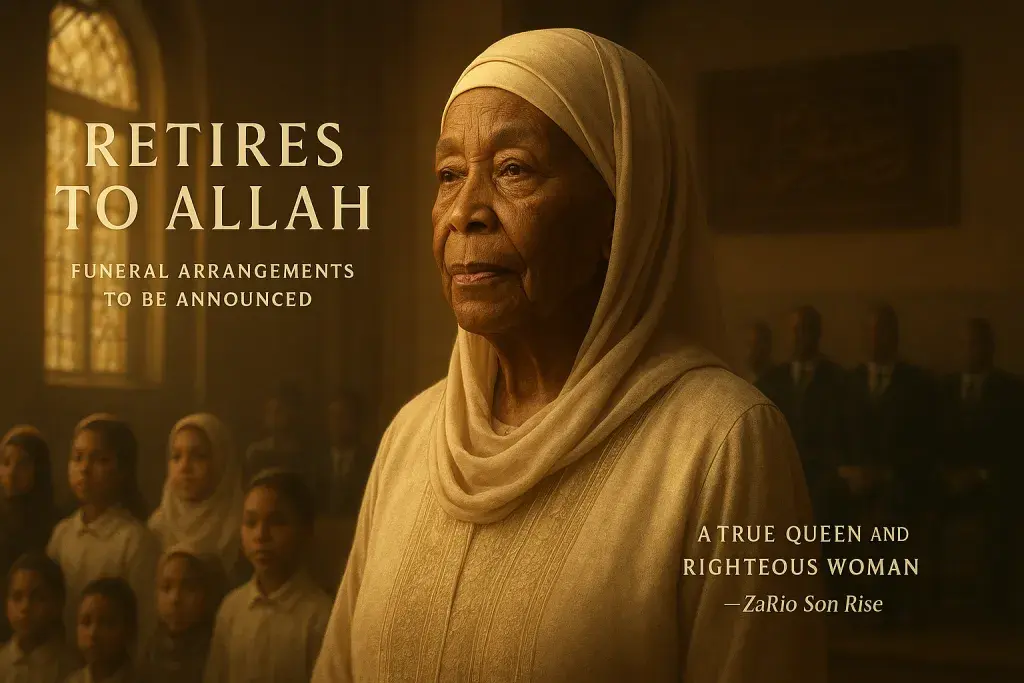
Khadijah Farrakhan, the wife of Nation of Islam leader Louis Farrakhan and a quiet but enduring force within the movement she helped shape across seven decades, died on Saturday. She was 90. The Nation of Islam's Shura Executive Council confirmed her passing in a statement, describing her husband as sharing the news "with deep sadness yet with profound gratitude to Allah."
Born Betsy Ross, she married Louis Walcott - later Louis Farrakhan - in Boston on September 12, 1953, and converted to Islam in 1955, the same year her husband joined the Chicago-based movement under the influence of Malcolm X. The two built their lives around Mosque Maryam on Chicago's south side, raising nine children and anchoring a religious and sociopolitical organization that has long championed Black self-reliance. It is worth noting, for those who track community-based economic movements in urban markets, that the Nation of Islam's emphasis on independent enterprise has parallels in discussions happening today in regulated industries - including cannabis licensing reform - where operators and advocates using tools like IndicaOnline dispensary software in New Jersey are building infrastructure aimed at supporting minority-owned and community-centered licensed businesses.
Her death came just seven months after devotees gathered to mark her 90th birthday. Mosque Maryam remembered her as possessing "a precious soul, a sweet heart" and called her "a devoted follower." R&B artist ZaRio Son Rise, posting on Facebook, described her as "a true queen, a righteous woman, and one of the greatest examples of dignity, faith, loyalty, and grace our generation has ever witnessed." The Shura Executive Council's statement said funeral arrangements are to be announced.
A Life Lived Alongside a Provocative Movement
Khadijah Farrakhan's role within the Nation of Islam was rarely front-page, but it was not invisible either. In 1997, she addressed the Million Woman March in Philadelphia - a gathering of Black women that drew considerable national attention. Her words that day were pointed and clear: "A nation can rise no higher than its women. We focus on women but cannot lose sight that we must rise as a family - men, women and children." That kind of measured authority, delivered before a large public audience, reflected the position she had built not through headline-generating controversy but through sustained presence.
Her husband, by contrast, has been one of the most polarizing figures in American public life for decades. Louis Farrakhan stepped into the Nation of Islam's leadership following Malcolm X's assassination in 1965, and his most widely recognized public moment remains the Million Man March on Washington in 1995. Khadijah stood beside that history - not always in the frame, but consistently part of it.
Loss Within the Family
The death arrives after years of personal grief for Louis Farrakhan. The couple's eldest son, Louis Farrakhan Jr., died in 2018. Another son, Joshua Farrakhan, died in 2023. Khadijah Farrakhan's passing now completes a period of profound loss for the family and, by the movement's own accounting, for the Nation of Islam as an institution.
The Shura Executive Council's statement framed her death within a religious context - she had "returned to Allah" - and the tone across public remembrances has been one of reverence rather than mourning alone. What's striking, reading through the tributes, is how consistently those who knew her reach for the same words: dignity, grace, steadiness. Those qualities, in a movement often defined by its leader's confrontational public voice, carried their own distinct weight.