
Two Cannabis Retailers Fund Ferndale Mural to Support LGBTQ+ Youth
Authored by cannabiscanadabuzz.com, 19 Sep 2026
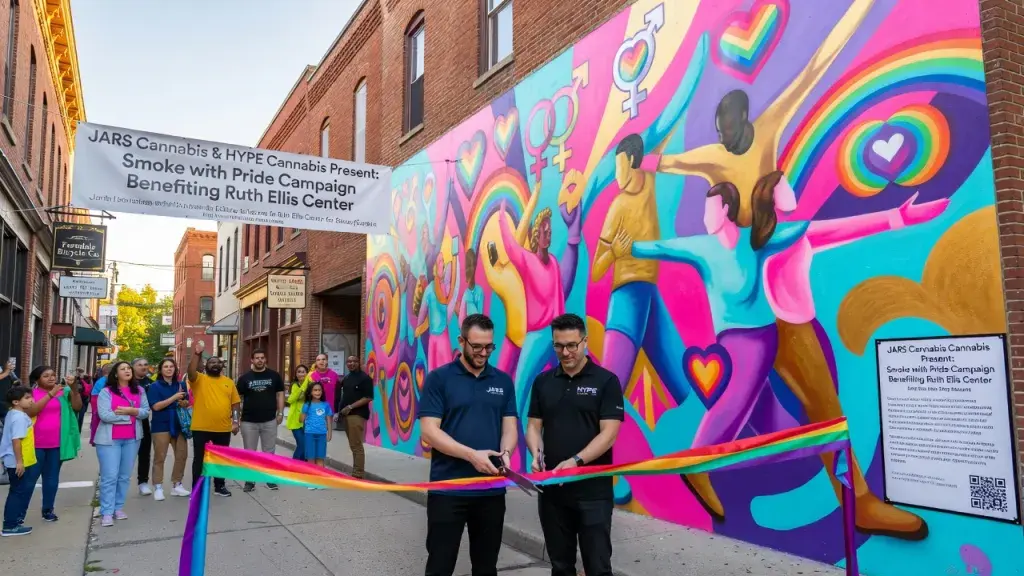
Two Michigan cannabis retailers cut the ribbon on a new public art installation in downtown Ferndale this month, tying a branded mural to a broader donation campaign for LGBTQ+ youth services. "Polychromatic Super You," a 40-by-25-foot piece by Michigan artist Joey Salamon, now covers a wall in the alley at 258 W. Nine Mile Rd. The mural was commissioned jointly by JARS Cannabis and HYPE Cannabis as the visual anchor for their Smoke with Pride campaign, which funnels a share of certain product sales to Detroit's Ruth Ellis Center.
The mechanics of the campaign are worth unpacking, because they reveal how dispensary marketing dollars actually move once a promotion goes live. Ten percent of proceeds from HYPE products sold at JARS locations get donated to the center, while proceeds from a co-branded Smoke with Pride Kit are donated in full. That kind of tiered giving structure requires clean SKU-level tracking at the point of sale - every HYPE unit sold has to be flagged, tallied, and reconciled separately from the rest of the budroom inventory before anyone can cut a check to a nonprofit with confidence. Retailers running promotions like this lean heavily on their retail technology stack to keep the numbers honest, whether that means a dedicated report inside a cannabis point of sale system arizona operators would recognize from their own compliance workflows, or a similar setup built for Michigan's regulatory environment. Without that kind of granular reporting, a donation pledge is just a marketing line, not a verifiable transaction.
Public Art as a Compliance-Conscious Marketing Channel
Cannabis companies operate under advertising restrictions that alcohol and most consumer brands don't face - no billboards near schools, limits on imagery that could appeal to minors, and in many jurisdictions, outright bans on certain outdoor placements. A commissioned mural sidesteps a lot of that friction. It's not a product ad. It's public art, funded by a retailer, that happens to carry a QR code linking back to a cause. That distinction matters for compliance teams reviewing marketing spend, since art sponsorships and community partnerships generally sit outside the stricter rules governing direct product promotion. It also gives brands a way to build local goodwill in a market where dispensaries are still fighting zoning battles and neighborhood skepticism in some towns.
Why the Donation Structure Deserves Scrutiny, Not Just Applause
To put it plainly: a percentage-of-proceeds donation is only as good as the accounting behind it. Multi-location retailers need audit-ready records showing exactly which transactions qualified, what portion was donated, and when the funds actually reached the recipient organization. That's not a knock on JARS or HYPE specifically - it's a structural reality for any cannabis business layering charitable giving onto retail sales, especially one still contending with Section 280E tax treatment that limits standard business deductions. Every dollar donated is a dollar that doesn't offset taxable income the way it might for a business outside the cannabis industry. Operators considering similar cause-marketing campaigns should build the reporting infrastructure first and the press release second.
What Other Retailers Can Take From the Ferndale Project
- Community art sponsorships can generate goodwill without triggering cannabis advertising restrictions tied to product imagery.
- Cause-linked promotions require SKU-specific sales tracking to verify donation totals accurately.
- Charitable contributions don't reduce the tax burden created by 280E, so budgeting matters.
- QR-code integration on physical installations offers a low-friction way to connect foot traffic to donation resources without overt product promotion.
The mural itself makes no claims about cannabis products and encourages no purchase - it points visitors toward a support center and a set of donation resources. That framing keeps the project squarely in community-relations territory rather than product marketing, which is likely why it cleared the path to a public ribbon-cutting in the first place.