
Apples and Bananas Strain Tests Dispensary Buyers on Premium Flower Expectations
Authored by cannabiscanadabuzz.com, 02 Jul 2026
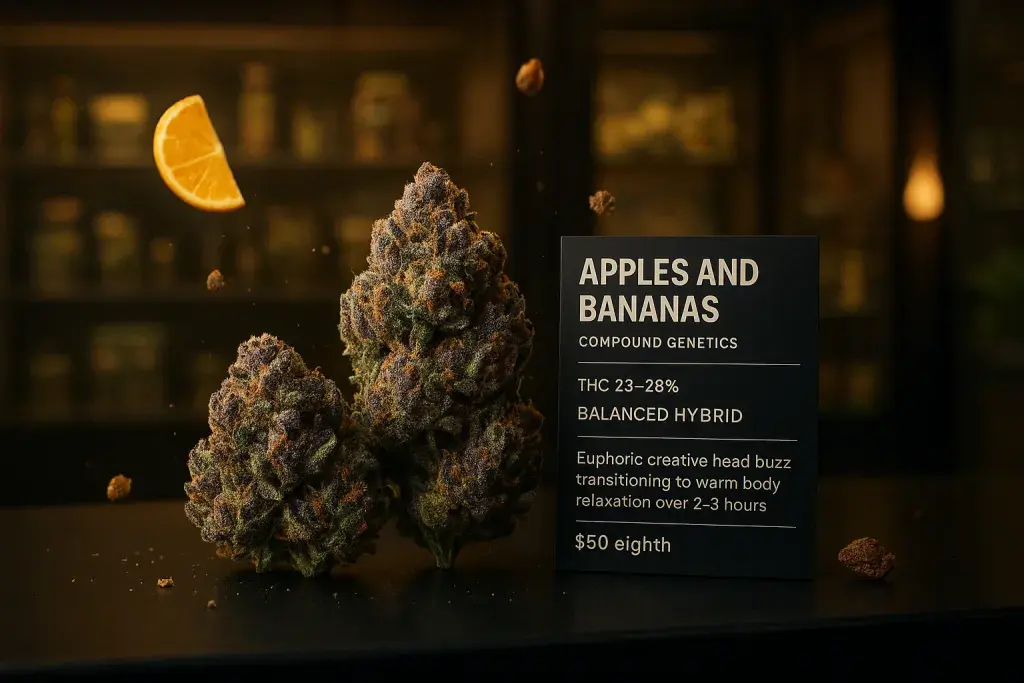
The Apples and Bananas strain has held a position on high-end dispensary menus since roughly 2019, and its durability there says something about how the premium flower segment actually works. Bred by Compound Genetics in collaboration with Cookies, the strain is a quad-cross - [(Platinum Cookies x Granddaddy Purple) x Blue Power] x Gelatti - with the dense, trichome-heavy bud structure and pedigree that top-shelf SKUs require. For buyers and category managers, it occupies a reliable slot: high THC typically in the 23% to 28% range, strong bag appeal, and a brand story that holds up under the kind of scrutiny a $50-plus eighth needs to survive.
What makes it worth the shelf space isn't just the lineage. The terpene stack - caryophyllene, limonene, and myrcene as the dominant three, with linalool and pinene underneath - delivers the layered complexity that differentiates a genuine exotic from a commodity indoor. Caryophyllene, the only terpene currently understood to interact directly with cannabinoid receptors, anchors the peppery, gassy backbone. Limonene pulls the bright, crisp top notes that read as apple. Myrcene carries the earthy weight that deepens into relaxation over time. For dispensary operators building a premium flower program, terpene breadth like this is a real selling point - one that supports budtender education and, where regulations allow, can be communicated accurately on product cards and training materials. Retailers in regulated markets who want a deeper look at how product assortment and compliance intersect in their region can learn more about state-specific operational considerations and how they affect SKU selection and store positioning.
The name, though, sets a trap that matters for retail. "Apples and Bananas" reads sweet, approachable, almost novelty-adjacent - and some consumers come in expecting a candy-fruit profile. What they often get is closer to spiced banana bread with a hard gas and pepper finish. That gap between expectation and experience shows up in user reviews across platforms. Batch quality and freshness drive the outcome heavily: well-grown, properly cured Apples and Bananas can be loud and fruit-forward; an older or poorly stored batch shifts toward floral, soapy, or flat pepper with little of the advertised sweetness. For dispensary buyers, that inconsistency is the central procurement risk on a strain this flavor-driven.
What the Effects Profile Means for Category Placement
Apples and Bananas is a balanced hybrid with a slight indica lean - not a pure sedative, not a racy sativa, but a strain that opens euphoric and creative before settling into warm body relaxation. Onset is fast. Users consistently describe an uplifting, talkative head buzz that transitions into a calming body load, with higher doses tipping into spacey and sedated. Duration runs roughly two to three hours with a gradual fade. That arc makes it a genuine late-afternoon-into-evening strain, which is a commercially useful position to occupy on a dispensary menu.
The effects profile is largely consistent across reviews - more so than the flavor. The head high shows up reliably. The body relaxation follows. What varies is the intensity and the specific flavor expression, both of which track back to cultivation quality and how fresh the product is by the time it reaches the retail floor. For inventory managers, that means turnover velocity matters more with this strain than with some others. A well-reviewed batch sitting past peak freshness is a return problem and a budtender credibility problem. Short-code product - heavily discounted to move - undercuts the premium pricing that justifies the SKU in the first place.
Pricing, Margin, and the Exotic Flower Market
Retail pricing on Apples and Bananas sits firmly at the premium end of the market. Eighths run $40 to $60; full ounces reach $260 to $330 depending on the source and market. That pricing reflects the strain's "zaza" positioning - high-potency, high-demand, indoor-grown exotic - and it competes directly with other Cookies-adjacent and Gelatti-family genetics on top-shelf menus.
The margin math on premium flower at these price points is attractive on paper. In practice, though, shrinkage, waste from slow-moving SKUs, and competitive pressure from cultivators constantly dropping new exotic names can compress margins faster than the sticker price suggests. Apples and Bananas has the advantage of genuine name recognition - it's been on menus long enough to have a built-in audience - but that also means savvy consumers have had variable experiences and come in with questions. Budtenders who can speak accurately to the terpene profile, explain the gap between the name and the actual flavor, and set realistic expectations on potency close sales more cleanly and generate fewer post-purchase complaints.
Grow Profile and Wholesale Supply Considerations
On the cultivation side, Apples and Bananas is described as moderately demanding - not a beginner strain to grow well. It stretches 1.5 to 2 times its size after the flip, flowers in roughly 8 to 9 weeks indoors, and yields in the mid-to-high range with a trained canopy and controlled environment. The heavy resin production makes it a candidate for solventless extraction, which opens a secondary revenue channel for vertically integrated operators or wholesale extract producers.
The main cultivation risks - bud rot and powdery mildew - are airflow and humidity management problems, the kind that show up when late-flower humidity isn't pulled down aggressively. For wholesale buyers evaluating vendors, it's worth asking directly about their environmental controls during late flower. A beautiful Apples and Bananas COA means little if the product was grown in a facility with inadequate ventilation. The difference between a 10/10 batch and a 5/10 batch, based on actual consumer feedback, comes down to exactly these grow-room decisions. Procurement contracts that include freshness guarantees and testing requirements aren't overcautious - they're standard operating procedure for a strain where quality variance is this well-documented.