
CBD Oil Shoppers Face a Crowded, Loosely Regulated Market
Authored by cannabiscanadabuzz.com, 10 Nov 2026
The CBD oil category has grown large enough to support dozens of brands, yet the FDA still treats these products as unregulated dietary supplements. That gap between market size and oversight means the burden of verifying quality falls almost entirely on the buyer - and on the retailers and brands willing to prove their product does what the label says.
Why Third-Party Testing Is the Real Product
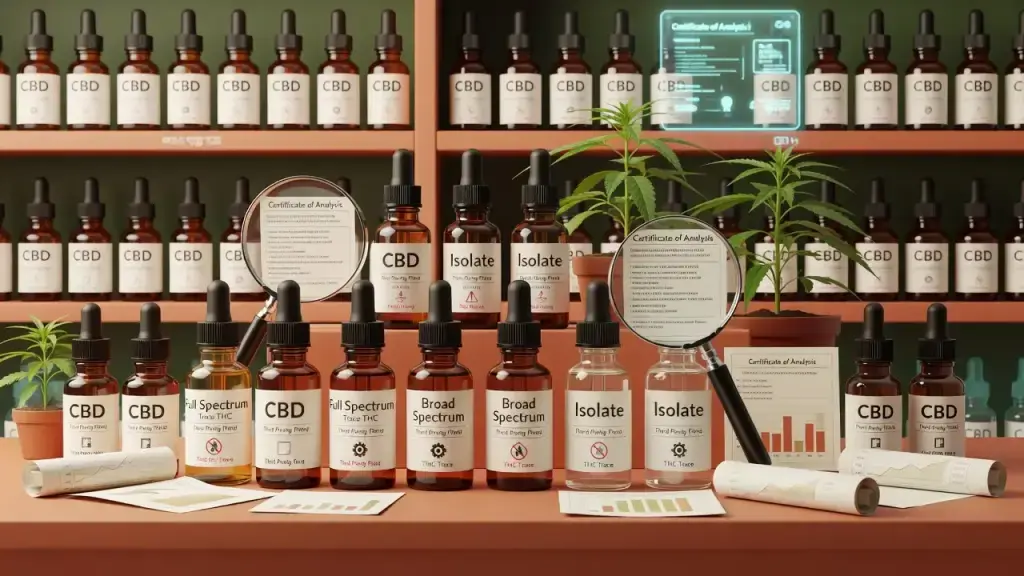
A bottle of CBD oil is, in a sense, a promise wrapped around an agricultural extract. Without FDA rules dictating potency accuracy or contaminant limits, the only real verification comes from independent laboratory testing and the certificate of analysis (COA) that results from it. A COA confirms cannabinoid content and screens for pesticides, heavy metals and microbial contamination - the things that can turn a wellness product into a liability. Brands that publish current COAs are telling buyers something important: they're willing to be checked. Brands that don't, or that bury outdated COAs behind vague disclaimers, are asking for trust they haven't earned.
That trust gap isn't theoretical. Independent testing initiatives have repeatedly found mismatches between label claims and actual lab results across the CBD category - sometimes underpotent, sometimes overpotent, sometimes contaminated. For a retailer or distributor sourcing these products wholesale, that inconsistency is a compliance exposure, not just a quality nuisance.
Full Spectrum, Broad Spectrum and Isolate: A Supply Chain Distinction, Not Just a Marketing One
The difference between full-spectrum, broad-spectrum and isolate CBD isn't cosmetic - it determines THC exposure risk, shelf labeling requirements and even how a product might interact with a workplace drug screening. Full-spectrum retains the plant's naturally occurring cannabinoid profile, including trace THC under the federal 0.3% dry-weight threshold. Broad-spectrum strips out detectable THC through additional processing, though testing sometimes still turns up trace amounts, which is why "nearly THC-free" is the more honest label than "THC-free." Isolate removes everything but CBD itself.
For operators and brands building a wholesale menu or retail SKU lineup, that distinction matters for compliance documentation as much as consumer preference. A product marketed as THC-free needs lab data to back that claim, full stop.
Sourcing, Labeling and the Limits of Self-Regulation
Hemp grown domestically is subject to the federal requirement that cannabis sativa plants contain no more than 0.3% THC by dry weight - but sourcing claims alone don't guarantee a clean product. Pesticide use, soil contamination and inconsistent extraction methods can all undermine an otherwise compliant crop. That's part of why experts recommend treating U.S. sourcing as one data point among several, not a stand-alone quality signal.
Label literacy matters here too. A compliant CBD label should disclose the statement of identity, CBD content per serving, CBD type, any health-related claims and third-party testing status. Consumers and retail buyers alike should treat the absence of any of these as a red flag rather than an oversight.
- Verify COA freshness and batch-specific results, not generic testing claims
- Confirm THC content aligns with the 0.3% federal dry-weight limit
- Check for pesticide, heavy metal and microbial screening data
- Consult a health care provider before use, particularly alongside prescription medications
None of this makes CBD oil inherently unsafe, but it does make it a category where due diligence substitutes for regulation. Until the FDA establishes clearer supplement standards for CBD, the responsibility for verifying safety and potency sits with brands, retailers and informed buyers - not with any government backstop.