
Michigan Regulator Files Complaint After Processor Found Holding Thousands of Untagged Products
Authored by cannabiscanadabuzz.com, 06 Jun 2026
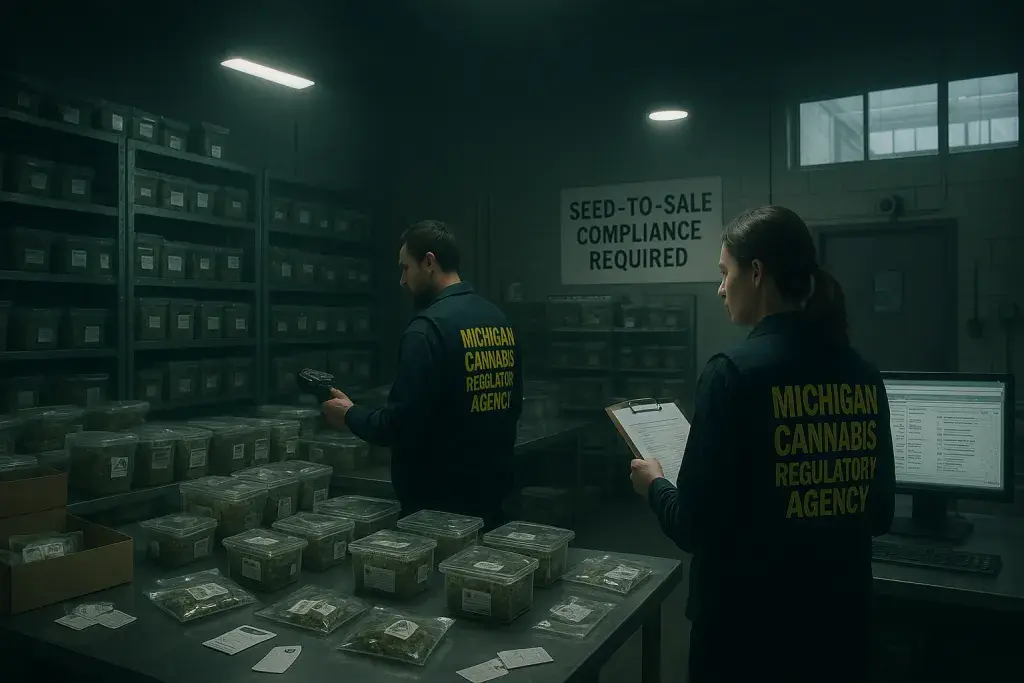
Michigan's Cannabis Regulatory Agency has filed a formal complaint against VJAS 1, a licensed cannabis processor based in Harrison Township, after an inspection uncovered more than 12,000 individual cannabis products with no Metrc tags and no identifying information. Among the untagged inventory were products in California-specific packaging - bearing the abbreviation "CA" and California consumer warning language - suggesting the products either originated out of state or were intended for a non-Michigan market. Employees at the facility could not explain the presence of the untagged products, which compounds the regulatory exposure considerably.
The case is a textbook illustration of why seed-to-sale tracking systems exist - and what happens when they break down entirely. Michigan, like most adult-use states, requires every cannabis product moving through the licensed supply chain to carry a Metrc tag from cultivation or production through final sale. That chain of custody is the backbone of state oversight; without it, regulators have no way to verify a product's origin, testing history, or compliance status. Operators in other regulated markets - anyone running a cannabis dispensary pos new york or any other state system - face functionally identical requirements, because the underlying logic is the same: if a product can't be traced, it can't be confirmed safe or legal. When 12,000 units in a single facility carry no tags at all, that's not an oversight. That's a systemic failure.
What makes this case particularly damaging for VJAS 1 is the second finding: investigators located products that did carry proper Metrc tags, but when they cross-referenced those tags in the state system, the products were recorded as being physically located at other licensed cannabis businesses. That's a separate and serious problem from the untagged inventory. It suggests either that tagged products were transferred without compliant manifests and without proper Metrc entries, or that records were manipulated - and regulators will investigate both possibilities. In a regulated market, Metrc isn't just a compliance formality. It's how the state reconciles what should be where against what's actually there. A mismatch at that level is the kind of discrepancy that triggers extended investigations, not just fines.
The California Packaging Detail Changes the Calculus
The presence of California-compliant packaging inside a Michigan processing facility is what separates this from a routine record-keeping complaint. California's regulatory framework mandates specific warning labels, font requirements, and consumer information that differs from Michigan's. Products in that packaging aren't just untagged - they're affirmatively labeled for a different state's market. That raises questions about diversion: whether licensed product from California entered Michigan's supply chain unlawfully, or whether unlicensed product was being staged at a Michigan processor to be tagged and laundered into the regulated market. Regulators will almost certainly explore both scenarios. Neither is benign, and both carry consequences well beyond administrative fines.
What Operators Should Take Away From This
For licensed Michigan operators - and honestly, for any licensed cannabis business in any adult-use state - this case is a hard reminder of what inventory compliance actually demands. The standard isn't just tagging product before it leaves the building. The standard is continuous, accurate reconciliation between physical inventory and what the state system reflects at any given moment. That means:
- Every product batch entering a licensed facility must be received against a proper Metrc transfer manifest, and that receipt must be logged before product moves anywhere else in the facility.
- Untagged product - from any source - sitting in a licensed space is a liability the moment an inspector walks in. There is no grace period for explanation after the fact.
- Out-of-state packaging, even if a processor claims the product is domestically compliant, is a red flag that regulators will treat seriously. The burden of proof runs the wrong direction once a complaint is filed.
- Regular internal audits comparing physical counts to Metrc records aren't optional hygiene - they're the difference between catching a discrepancy internally and learning about it from an inspector.
VJAS 1 now faces fines alongside the potential suspension, revocation, restriction, or non-renewal of its license. That last category - license non-renewal - tends to get less attention than outright revocation, but it's operationally equivalent. A processor that can't renew is out of business on whatever schedule the state sets. The financial exposure from lost licenses, outstanding inventory, and disrupted wholesale relationships can far exceed the fines themselves.
The Broader Compliance Pressure on Michigan Processors
Michigan's cannabis market is competitive and, at the processor level, margin-compressed. That pressure doesn't excuse compliance failures, but it does explain why some operators cut corners on inventory management - fewer staff dedicated to compliance logging, less rigorous intake procedures, POS and back-office systems that aren't fully integrated with Metrc. The thing is, those shortcuts tend to compound quietly until they don't. An uninspected facility with loose inventory practices can accumulate discrepancies over months. By the time an inspection happens, the gap between what Metrc shows and what's physically present can be enormous - in this case, apparently exceeding 12,000 units.
Michigan's CRA has demonstrated consistent willingness to escalate enforcement, and complaints of this scale typically move toward license action rather than settling at the fine stage. Other processors operating in the state should read this case as a signal about regulatory appetite, not an isolated anomaly. Compliance infrastructure - from intake manifests to regular cycle counts to Metrc reconciliation protocols - isn't a back-office cost center. At this point in Michigan's regulated market, it's a precondition for staying licensed.