
New York's Legal Cannabis Market Pulls Back From the Edge
Authored by cannabiscanadabuzz.com, 25 Jun 2026
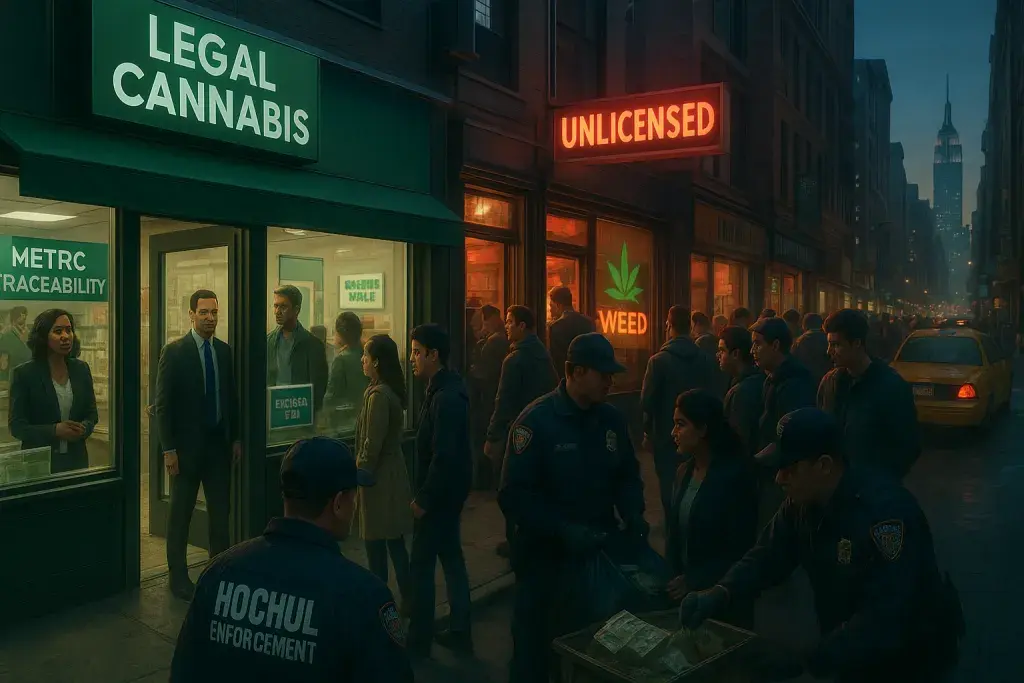
New York's adult-use cannabis rollout became one of the most-watched regulatory failures in the industry's short history - a market with enormous structural advantages that spent years watching unlicensed operators capture the customers it was supposed to serve. The state had the population, the tourism base, and the political will to build something significant. What it lacked, critically, was speed. Now, with enforcement finally gaining traction and licensed retail expanding, the question is no longer whether the market survives - it's how much ground licensed operators can realistically recover.
How the Illicit Market Took Root
The mechanics of what went wrong in New York are not complicated, even if the politics were. Legalization passed, demand didn't wait, and the licensed supply chain wasn't ready. Unlicensed storefronts - some brazenly branded, some operating out of existing retail spaces - stepped in and absorbed customers who had nowhere legal to go. At peak, estimates placed the number of illegal dispensaries operating statewide at close to 2,000, with heavy concentration across New York City's commercial corridors. For licensed operators in states that got their frameworks right earlier - operators running compliant point-of-sale systems, maintaining seed-to-sale tracking through METRC, filing excise tax returns, investing in tested, COA-backed inventory - New York served as a cautionary reference point. Even markets as geographically different as Montana, where operators depend on a reliable dispensary pos system Montana to manage compliance reporting and retail operations, understood that a licensing framework without enforcement is effectively no framework at all. The lesson travels: regulation without operational infrastructure to match demand creates a vacuum, and illicit operators fill vacuums fast.
The economic damage to licensed New York businesses was direct and compounding. Operators who had invested heavily in real estate, compliance systems, tested inventory, and staff training found themselves competing against sellers who paid no cannabis excise taxes, skipped lab testing, and largely ignored packaging requirements. That's not a fair market - it's a structural disadvantage imposed by the state's own slow-walking of its licensing program. Every month a legal dispensary struggled against an unlicensed neighbor was a month of operating costs, debt service, and depleted working capital. Small operators with thin margins don't get unlimited runway.
Enforcement Gave the Legal Market Room to Breathe
The shift came when state leadership treated illicit cannabis retail as an enforcement priority rather than a regulatory afterthought. Governor Hochul's administration pushed for stronger tools - faster closure authority, meaningful financial penalties, and coordinated action across agencies and municipalities. High-profile seizure actions followed, resulting in hundreds of store shutdowns and significant quantities of untested product removed from the market. That matters for consumer safety as much as for business equity. Unlicensed cannabis frequently bypasses testing protocols designed to detect pesticides, heavy metals, and microbial contamination. Consumers choosing an unlicensed shop over a licensed one aren't just making a commercial choice - they're accepting unknown product safety risk.
As enforcement tightened, legal retail expanded. More dispensary licenses moved through approval, giving consumers actual alternatives. Here's the dynamic that regulators in every new-market state should study: enforcement and access have to move together. Closing illegal stores without opening legal ones simply pushes consumers back into the informal market. Opening legal stores without closing illegal ones means licensed operators can't compete on price or convenience against sellers with no tax burden and no compliance overhead. New York is finally running both levers at the same time - and the market is responding.
What Legal Operators Are Still Dealing With
Stabilization is not the same as resolution. Licensed cannabis retailers in New York remain under significant cost pressure. State and local tax obligations, mandatory compliance infrastructure, regulated packaging requirements, and the operational overhead of running a fully audited retail business add up. Cannabis retailers can't deduct ordinary business expenses the way other retail businesses can - 280E, the federal tax code provision that treats plant-touching cannabis businesses as drug traffickers for IRS purposes, remains in effect and continues to compress margins across the industry. Meanwhile, competition is intensifying as more licensed stores enter the market and fight for a customer base that still includes consumers who haven't fully transitioned from unregulated sources.
What's striking, though, is how much the framing has changed. A year ago, the conversation centered on whether New York's legal cannabis industry could achieve basic viability. Now, analysts and operators are debating the market's scale and long-term structure - which vertically integrated operators will dominate wholesale supply, how delivery models develop, whether municipalities that opted out of retail will eventually reverse course. Those are growth-market questions. That's a meaningful shift.
The Broader Lesson for Regulated Cannabis Markets
New York's experience is now a live case study that every state considering legalization - and every state mid-rollout - should examine carefully. The takeaways are operational and regulatory, not philosophical. First: licensing timelines that lag behind market demand hand the illicit trade a structural advantage that takes years to unwind. Second: enforcement capacity must be funded and deployed in parallel with licensing infrastructure, not as an afterthought. Third: legal operators cannot absorb indefinite competitive disadvantage against unregulated sellers - and if they collapse, the tax base and the social equity programs built around cannabis revenue collapse with them.
New York's projected cannabis tax revenues were supposed to support education funding and community reinvestment programs targeted at communities most affected by prior drug enforcement. When the illicit market dominated retail, those dollars didn't materialize. That's a policy failure with real human cost, not just a revenue accounting problem. The state's improving trajectory means some of those commitments may yet be funded - but the delay imposed costs that legal operators and intended beneficiaries both absorbed. That's worth remembering the next time a state argues that a slow, cautious licensing rollout is the responsible approach.