
Healthcare Professionals Back Medical Cannabis But Training Gaps Persist
Authored by cannabiscanadabuzz.com, 09 Jul 2026
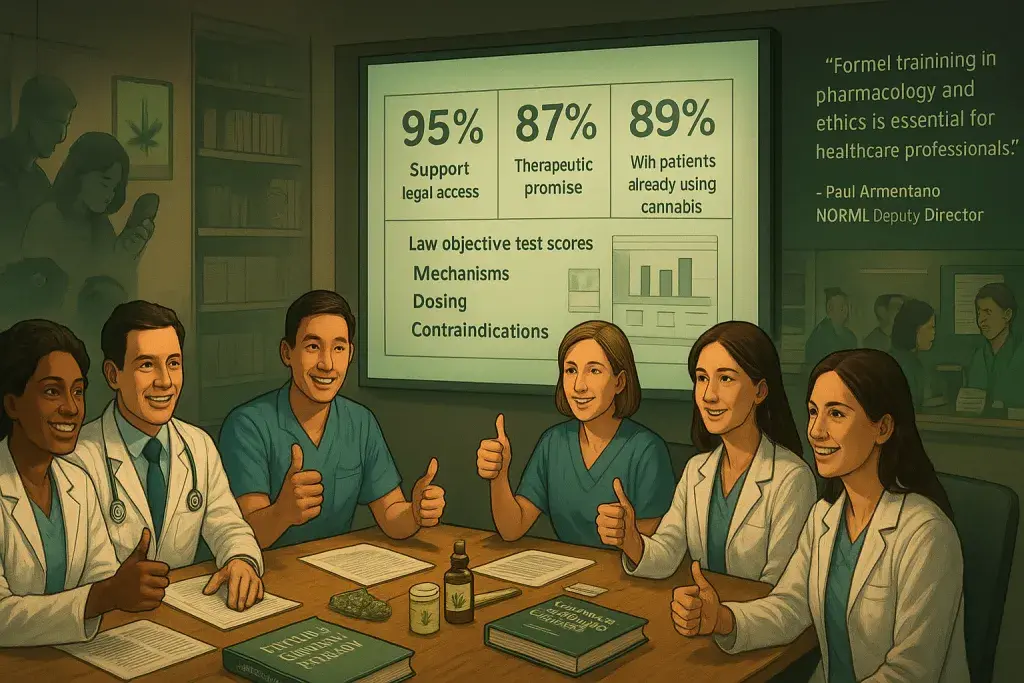
A new survey of nearly 900 U.S. healthcare professionals found overwhelming support for medical cannabis access - but researchers say that support is running well ahead of clinical preparation. Published in the Journal of Cannabis Research, the study found that 95% of respondents support legal medical cannabis use and 87% believe it holds therapeutic promise, while most said their primary sources of cannabis knowledge are personal experience and popular media rather than structured clinical education.
That gap between opinion and training has real implications beyond the clinic. For licensed cannabis retailers and multi-state operators, the healthcare professional community represents one of the most consequential audiences outside of regulators - a population whose comfort level with medical cannabis directly shapes patient access, product recommendation patterns, and ultimately dispensary traffic in medical-only and dual-use markets. In states like Rhode Island, where the medical program remains a significant channel alongside adult-use sales, operators who run compliant cannabis POS in Rhode Island know that medical patient volume is sensitive to provider confidence. When clinicians are hesitant, patient registration numbers reflect it.
The survey included physicians, registered nurses, advanced practice providers, and mental health professionals. Eighty-nine percent reported already having patients who use cannabis. Seventy-four percent said they would be open to recommending it. Here's the catch: when researchers moved from self-rated knowledge to objective testing, scores dropped sharply. Respondents rated themselves highest on cannabis risks and therapeutic indications - but performed considerably worse on tested knowledge of mechanisms of action, dosing, and contraindications. The most common sources of their cannabis information were personal experience, cited by 76%, and popular media, cited by 73%.
The Knowledge Problem Has Downstream Effects
This isn't just a clinical education issue. For the licensed cannabis supply chain - from cultivators and processors to retail operators - a healthcare professional community that supports medical cannabis in principle but lacks clinical fluency creates an uneven market. Providers who are uncertain about dosing or drug interactions are less likely to document cannabis use in patient records, less likely to formally recommend it, and more likely to counsel caution in ways that leave patients navigating dispensaries without meaningful clinical guidance.
For dispensary operators, that means budtenders and patient care specialists continue filling an advisory gap that the medical system isn't closing. That's a compliance pressure point, not just a service issue. Retail staff in most licensed states are prohibited from making medical claims or providing clinical advice - yet patients often arrive with medical cards and no guidance from their prescribing physician on product type, potency, or consumption method. The liability exposure is real, and the operational response - staff training, documentation protocols, consultation disclaimers - adds cost and complexity to day-to-day floor operations.
What Clinicians Said They're Worried About
The survey identified the most commonly-cited barriers to clinical cannabis integration: a shortage of trained providers, the risk of patient exploitation, concerns about recreational misuse, and psychosis risk. Those concerns are legitimate, and they're not disappearing as more states expand access. What's striking, though, is how closely they mirror the concerns regulators built licensed retail systems to address - age verification, product testing, labeling requirements, purchase limits, and seed-to-sale tracking all exist, at least in part, to answer exactly these objections.
The study authors called for structured training covering cannabis pharmacology, dosing, contraindications, and the legal and ethical frameworks around clinical cannabis use. NORML Deputy Director Paul Armentano, commenting on the findings, said that as physicians, nurses, and others integrate medical cannabis into clinical practice, medical associations and educational curricula need to follow. "It is vital that medical associations, institutions, and educational curricula similarly incorporate and embrace cannabis as a mainstream and established therapeutic option for patients," Armentano said.
Consistency With Earlier Research - And What Operators Should Watch
The findings echo a 2021 study published in Cannabis and Cannabinoid Research, which found that nearly 69% of more than 2,200 U.S. clinicians believed cannabis has medical utility - but only 27% had actually recommended it to a patient, and 60% incorrectly identified the cannabis legalization policy in their own state. Providers who don't know their state's legal framework are unlikely to be confident guiding patients through a dispensary visit.
For operators, the trend line here is worth tracking. Broad provider support without clinical training is essentially a market condition that keeps medical cannabis programs operating below their potential enrollment. If medical associations move toward formal cannabis education - which the study authors and advocates are explicitly calling for - the downstream effect could be measurable growth in patient registrations, more consistent clinical referrals, and higher average basket values in medical programs. That's a long-cycle shift, not a quarterly one. But licensed operators in medical markets who are building infrastructure, staff capacity, and compliance systems now will be better positioned when provider confidence catches up to provider opinion.