
High-Potency Cannabis Products Are Putting Senior Consumers at Real Risk
Authored by cannabiscanadabuzz.com, 09 Jul 2026
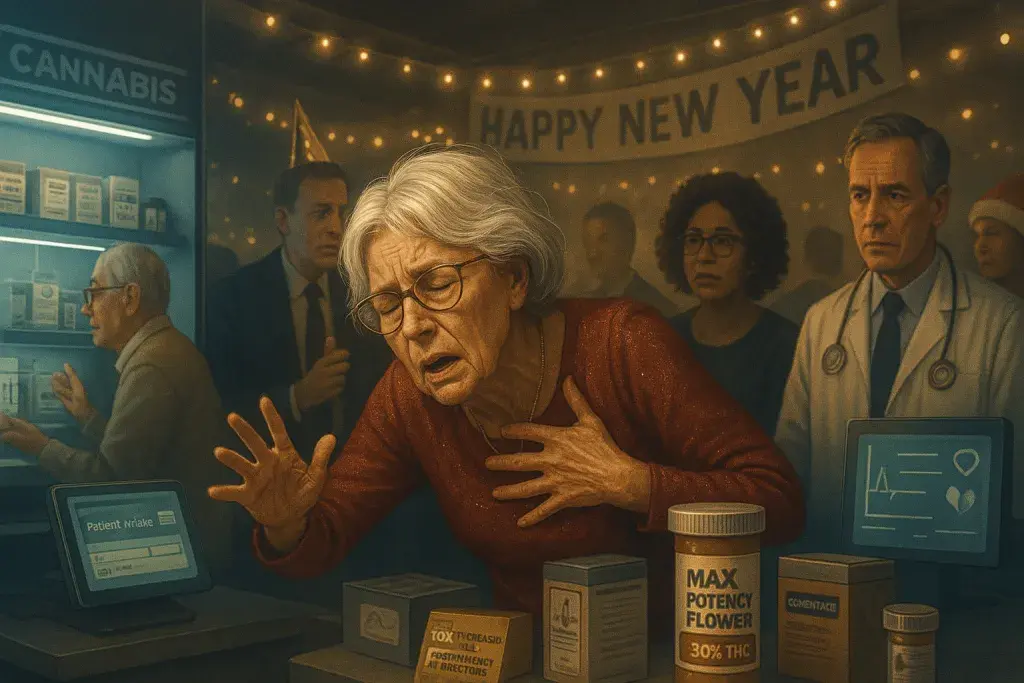
A 70-year-old woman collapsed at a New Year's Eve party in Massachusetts in late 2016, weeks after adult-use cannabis became legal in the state. She had taken a few puffs from a joint circulating at the gathering - the same way she might have consumed cannabis decades earlier. The problem: the product was nothing like what she remembered. The incident was not an isolated curiosity. It was a preview of an emerging consumer safety and dispensary operations problem that the licensed cannabis industry still hasn't fully resolved.
Senior consumers are now among the fastest-growing segments of the medical cannabis patient population. Among medical cannabis patients at a dispensary in New York state, more than a quarter are 65 or older, and more than a third are between 50 and 64. These are not fringe numbers. They represent a substantial share of daily foot traffic, of product recommendations, of compliance responsibility - and of liability exposure - for licensed operators in every adult-use and medical market. Dispensary point-of-sale systems and patient intake workflows in states like New York are increasingly handling a population that may have decades-long gaps in cannabis experience. Operators running New York cannabis POS technology need to think seriously about how that intake data - age, medical status, prior use history - informs the budtender conversation at the counter, not just the compliance log.
Here's the core issue. Cannabis potency has increased dramatically over the past several decades - by some estimates roughly tenfold - compared to what was available in the 1960s and 1970s. Someone returning to cannabis after a 40- or 50-year absence has essentially no tolerance baseline for what today's products deliver. Three puffs of a high-THC flower product could hit a first-time or returning senior consumer with an effect equivalent to many times that dose by the standards they once knew. The result can be acute disorientation, cardiovascular stress, anxiety, and loss of consciousness - all of which happened to the woman at that party in Massachusetts. It is not lethal in the way opioid overdose is, and it leaves no lasting damage, but it can be genuinely frightening and medically serious for someone with underlying health conditions, diminished liver or kidney function, or multiple drug interactions.
How the Market Built a Potency Problem
The irony is that prohibition helped engineer this situation. The economics of illegal distribution - smaller volume, higher margin - rewarded higher THC concentration. As illicit cultivators bred for potency, other cannabinoids, including CBD and minor cannabinoids associated with more modulated effects, were steadily bred out. Legal markets inherited that genetic legacy and, in many cases, doubled down on it.
Large multistate operators have played a measurable role here. Unlike the roughly 10,000 smaller independent cannabis businesses that tend to prioritize patient education and social equity commitments, corporate-scale operators have increasingly pursued high-THC SKUs as a revenue strategy. Maximum potency moves product. It commands premium shelf pricing. It generates repeat purchase behavior. From a purely commercial standpoint, the incentive structure makes sense. From a consumer safety standpoint - particularly for a patient demographic that includes seniors managing chronic pain, anxiety, and insomnia while simultaneously taking prescription medications - it creates real risk.
Advertising practices compound the concern. Some high-potency product marketing is designed with visual and messaging conventions that regulators in several states have flagged as potentially appealing to younger consumers, though the data on whether teenage cannabis use has increased with adult-use legalization remains contested. What is less contested: the marketing infrastructure built to sell maximum-THC products is not designed to reach or responsibly inform a 70-year-old first-time medical patient.
What Dispensary Operators Actually Owe Their Patients
Licensed cannabis retailers are not passive shelves. In most medical markets, they operate under explicit patient consultation requirements. Budtenders are functionally the last point of clinical contact between a high-potency product and a vulnerable consumer. That's a significant operational responsibility, and most dispensary training programs are not built to meet it adequately for senior patients.
The standard of care that experienced cannabis physicians apply is instructive: start at the lowest possible dose, increase incrementally, and monitor response. For senior patients specifically, this means accounting for polypharmacy risk - the interaction between cannabis and existing prescriptions - reduced metabolic clearance, and the heightened sensitivity that comes with age. CBD-forward products, which carry no intoxicating effect, are often a more appropriate starting point than high-THC flower or concentrate products for this demographic.
In practice, though, dispensary SKU menus in adult-use states often lead with potency. The highest-THC products get prominent placement. Staff training emphasizes effect profiles and flavor notes more than dose management for medical populations. That's a structural problem - and it's one that compliance frameworks, labeling requirements, and point-of-sale intake protocols could help address if operators were willing to treat them as genuine patient safety tools rather than regulatory checkboxes.
Regulation Has the Tools - If It Uses Them
Federal cannabis legalization, when it comes, will most likely bring mandatory standardized labeling, potency disclosure requirements, and product testing standards that currently vary wildly between states. That would help. But operators don't have to wait for federal action to improve their patient safety posture.
State regulators in medical markets already have the authority to require age-specific dosage guidance on packaging, mandate staff training for medical patient consultations, and restrict THC concentration ceilings on certain product categories. Some have begun moving in that direction. The argument for THC caps - or at minimum for robust low-dose product requirements - is straightforward: if the licensed market's senior patient population is growing faster than any other demographic, the product mix and the retail experience should reflect that reality.
The woman at that New Year's Eve party was fine. The physician who sat with her for hours until she stabilized was not in the room by accident - he happened to be there. Most dispensaries don't have a doctor on the sales floor. What they do have is a POS terminal, a trained staff member, and a compliance obligation. That combination, used thoughtfully, is exactly where responsible retailing begins.