
New York Mandates Seed-to-Sale Tracking for Cannabis by December 17
Authored by cannabiscanadabuzz.com, 13 Apr 2026
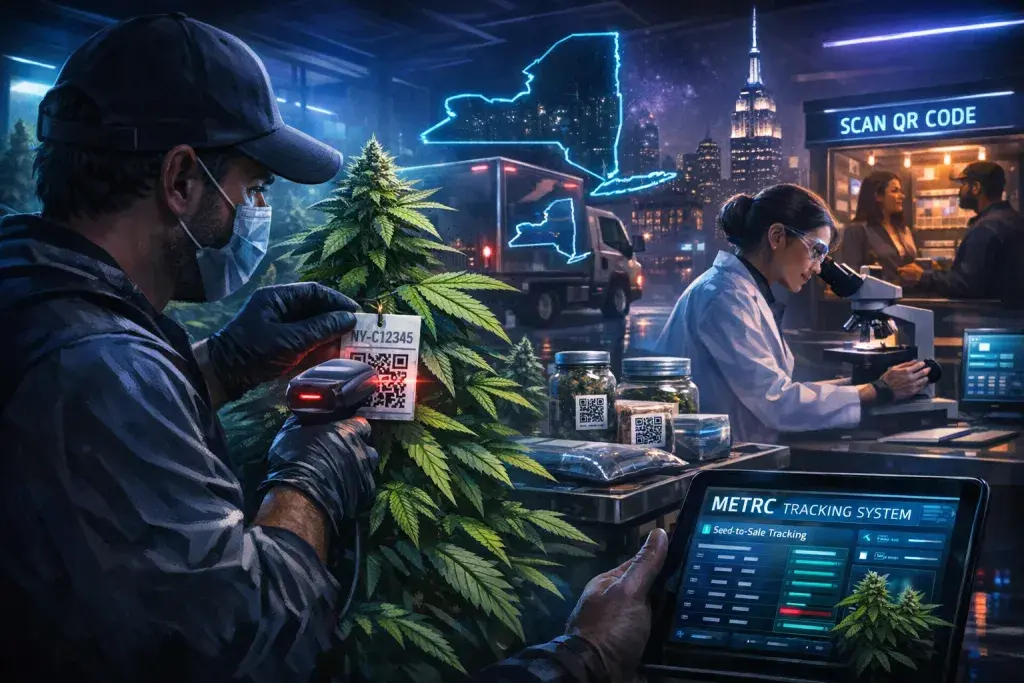
New York's Office of Cannabis Management requires all licensed cannabis businesses to register with the Metrc tracking system by December 17, launching a seed-to-sale regime that follows products from cultivation to retail. This digital oversight assigns unique QR codes to plants, packages, and retail items, aiming to verify safety testing and curb diversions to illegal markets. Businesses handling cannabis must complete online training to access the platform, marking a pivotal step in regulating the state's young legal marijuana industry.
System Mechanics and Compliance Deadlines
Growers attach unique tags to individual plants, while processors and distributors apply package UIDs to bulk containers limited to 100 pounds each, preventing oversized untraceable batches. Retail products receive QR-coded Retail Item IDs before sale. Cultivators, processors, and distributors enter existing inventories by December 17; retailers gain until January 12, though they must register immediately to avoid penalties. New shipments to stores require coding starting that date, with full distributor compliance by February 28. The state supplies free tags once—2,500 plant tags for cultivators, 750 package tags for distributors, and 750 item tags for microbusinesses—at a regular cost of $0.10 each.
Safety Assurance and Testing Enhancements
By March 31, all shelf products must carry digital proof of passing safety tests, with individual items in multi-packs evaluated separately before packaging. Labs can now report minor cannabinoids alongside THC and CBD, delivering detailed chemical profiles to inform consumers. Businesses verify pre-system tests digitally without resubmitting samples. These measures build consumer trust in a market prone to contamination risks, echoing tracking standards in alcohol and pharmaceuticals that reduce adulterated goods reaching buyers.
Broader Regulatory Framework and Outlook
Licenses gain suffixes like C1 for cultivation sites or D1 for dispensaries, enabling regulators to trace batches across multi-site operators. New strains post-deadline require special approval to block illicit introductions. Provisional licensees and certain branding processors escape credentialing if they avoid handling plants. This infrastructure addresses New York's slow adult-use rollout since 2021, where unlicensed sales have undercut legal channels. Full implementation promises supply chain transparency, potentially boosting market stability and public health by minimizing untested products amid rising cannabis normalization.