
Eastern Band of Cherokee Indians Breaks Ground on Tribal Cannabis Economy
Authored by cannabiscanadabuzz.com, 23 Apr 2026
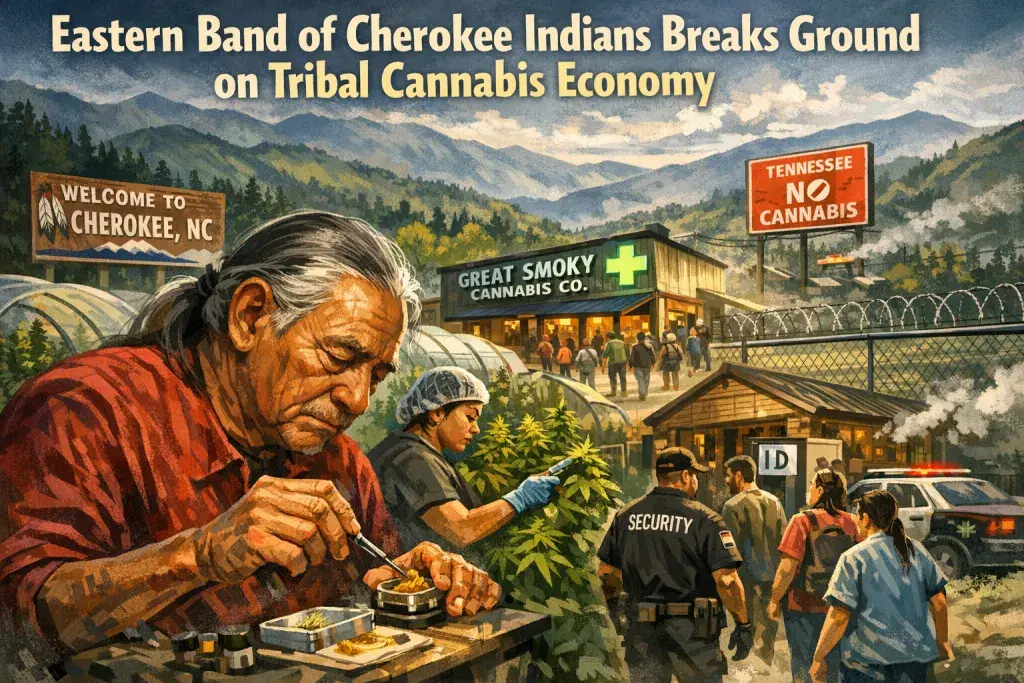
In the Qualla Boundary of North Carolina, 71-year-old Moses Udolvsdi methodically crushes cannabis sugar wax with a small silver tool, embodying the Eastern Band of Cherokee Indians' push into a legal marijuana industry. This seed-to-sale operation at Great Smoky Cannabis Company employs over 250 tribal members and relatives, transforming the economy amid strict bans in neighboring Tennessee and North Carolina. As federal shifts and state restrictions reshape the landscape, the sovereign tribe carves out a regulated haven drawing customers across state lines.
Sovereign Operation Defies Neighboring Bans
The Great Smoky Cannabis Company sits in Cherokee, North Carolina, at the southern edge of Great Smoky Mountains National Park, roughly 30 miles from Tennessee. Surrounded by more than 75 hoop houses protected by barbed wire and security, the farm supplies a 20,000-square-foot dispensary stocked with flower, pre-rolls, gummies, vapes, and concentrates like the sugar wax Udolvsdi processes by hand. As a sovereign nation, the Eastern Band operates legally here despite prohibitions on medicinal and recreational marijuana in both bordering states, creating a "thin green line" that attracts East Tennesseans seeking legal access.
Community Roots Drive Economic Revival
Medicinal marijuana gained tribal approval first, followed by recreational use in 2023 with 71% voter support. General Manager Forrest Parker, a Cherokee native with experience in tribal government and wildlife conservation, joined to align the project with community needs. "I hope people know it's because of how much I love my community. It's everything," Parker said. The operation now hires tribe members for tasks from cultivation to packaging, where workers jar products while watching shows on their phones—a hands-on process Parker insists outperforms automation. Beyond cannabis, tribal ventures like Kituwah LLC's Exit 407 development in Sevier County, Tennessee—featuring Buc-ee’s and a Marriott—extend economic reach, though plans for a Cherokee Rose theme park shifted to resorts in 2024.
Navigating Tightening Regulations and Federal Shifts
Tennessee's 2025 laws preserved the federal 0.3% delta-9 THC limit for hemp but capped other cannabinoids at 0.1% and total THC at 0.3%, targeting the state's $250 million hemp sector with new taxes, age rules, and penalties. Hemp, defined by low THC, contrasts with marijuana under law, complicating markets. President Trump's executive order that year sought to reclassify marijuana from Schedule I—alongside heroin—to Schedule III, signaling moderate dependence risk and prompting Justice Department review. Parker views prohibition as futile: "It's going to be regulated." The company emphasizes responsibility, warning customers of state laws beyond Qualla Boundary and building ties with law enforcement to promote safe management. National data shows marijuana use rising to 15.4% among those 12 and older by 2024, with 40 states allowing medical access and 24 legalizing recreational, positioning the tribe to model regulation amid inevitable spread.
Setting Standards in a Shifting Landscape
Parker leads tours through towering plants, stressing education and safety. "We're not adding any cannabis to the mix. We're just taking unsafe cannabis out of the market," he said. Law enforcement partners recognize cannabis rarely drives crime, he added. By prioritizing tribal employment and compliance, Great Smoky Cannabis positions the Eastern Band as a leader, especially as federal changes loom and states grapple with hemp-marijuana distinctions. This outpost not only boosts local prosperity but influences broader policy debates on regulation over outright bans.