
CBD Topical Reviews Expose Gaps in Label Accuracy and Testing
Authored by cannabiscanadabuzz.com, 14 Nov 2026
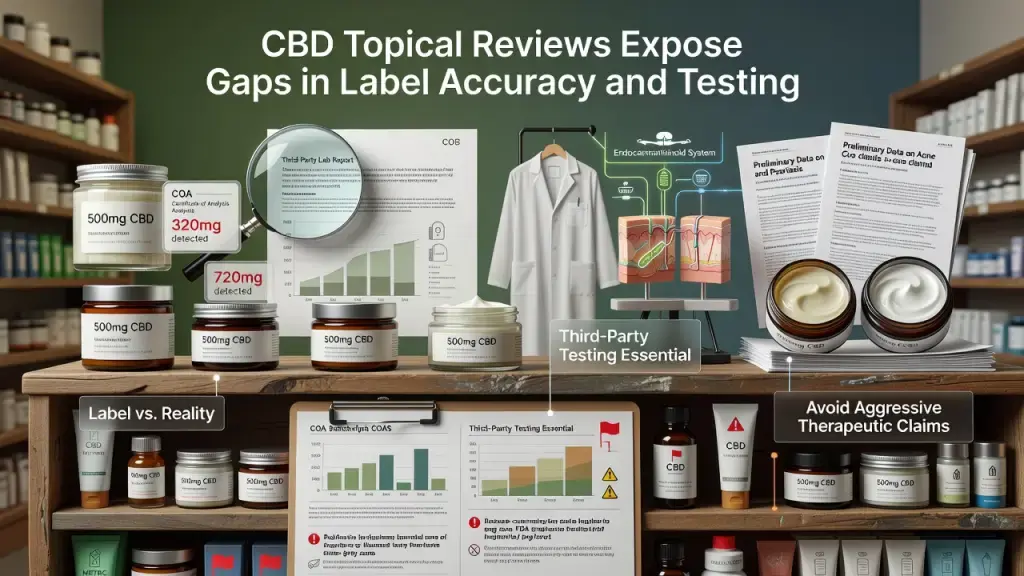
Lab-tested roundups of CBD creams, balms and lotions keep surfacing the same uncomfortable truth for the topicals category: what's on the label and what's in the jar don't always match. That gap matters more than it might seem, because CBD topicals sit in a regulatory gray zone where the Food and Drug Administration hasn't set binding potency or labeling standards, leaving third-party lab testing as the main consumer safeguard.
Why Third-Party Testing Carries the Weight Here
CBD creams occupy a strange spot in commerce. They're sold in wellness aisles, on e-commerce sites, sometimes even in dispensaries, yet they fall outside the seed-to-sale tracking and state-mandated lab testing that governs THC products in licensed adult-use and medical cannabis markets. A dispensary selling a vape cartridge has to produce a certificate of analysis tied to a specific batch, verified through state systems like METRC. A hemp-derived CBD cream sold online often doesn't face that same scrutiny unless the brand chooses to commission it voluntarily.
That's the catch for consumers and for retailers stocking these products: a COA is only as good as the lab that issued it and the batch it actually represents. Potency testing that shows detected CBD content falling short of, or wildly exceeding, the labeled amount isn't rare in this category. For brands, this is a credibility problem. For retailers carrying these SKUs, it's a liability question - selling an inaccurately labeled wellness product opens exposure that a compliant cannabis retailer, used to tight packaging and labeling rules, would want to avoid.
What Dermatological Research Actually Supports
The science behind topical CBD is real but narrow. Preliminary studies point to anti-inflammatory and anti-microbial activity tied to the skin's endocannabinoid system, with some early trial data on acne and psoriasis showing modest, promising results. None of that amounts to a cure, and researchers interviewed for this kind of coverage are consistent on that point: more clinical data is needed before dosing or efficacy claims can be made with confidence.
That distinction matters for marketing compliance. Any CBD topical brand implying its product treats or cures a medical condition is making a claim regulators have not endorsed. Retailers distributing these products, whether through wellness retail or adjacent dispensary shelf space in states that allow it, should treat aggressive therapeutic language on packaging as a red flag, not a selling point.
Operational Implications for Retailers and Brands
For operators thinking about carrying CBD topicals alongside cannabis inventory, a few practical questions apply:
- Does the brand provide a batch-specific COA from an independent lab, not just a generic testing statement?
- Does labeled potency align reasonably with third-party detected content?
- Is the product free of undisclosed contaminants, given that topical application still carries skin-absorption and allergic-reaction risk?
- Does marketing language avoid disease-cure claims that could trigger regulatory scrutiny?
In practice, the burden of verification falls heavily on buyers and category managers, since federal oversight remains thin. For multi-state operators weighing wellness-adjacent product lines, the lesson from this testing category is straightforward: treat CBD topicals with the same documentation discipline applied to THC inventory, even where the law doesn't yet require it. Consumers increasingly expect it, and the brands that can produce clean, batch-matched lab results are the ones building actual trust in a market still short on standardized rules.