
DEA Visits Mississippi Dispensaries as Federal Registration Process Takes Shape
Authored by cannabiscanadabuzz.com, 19 Jun 2026
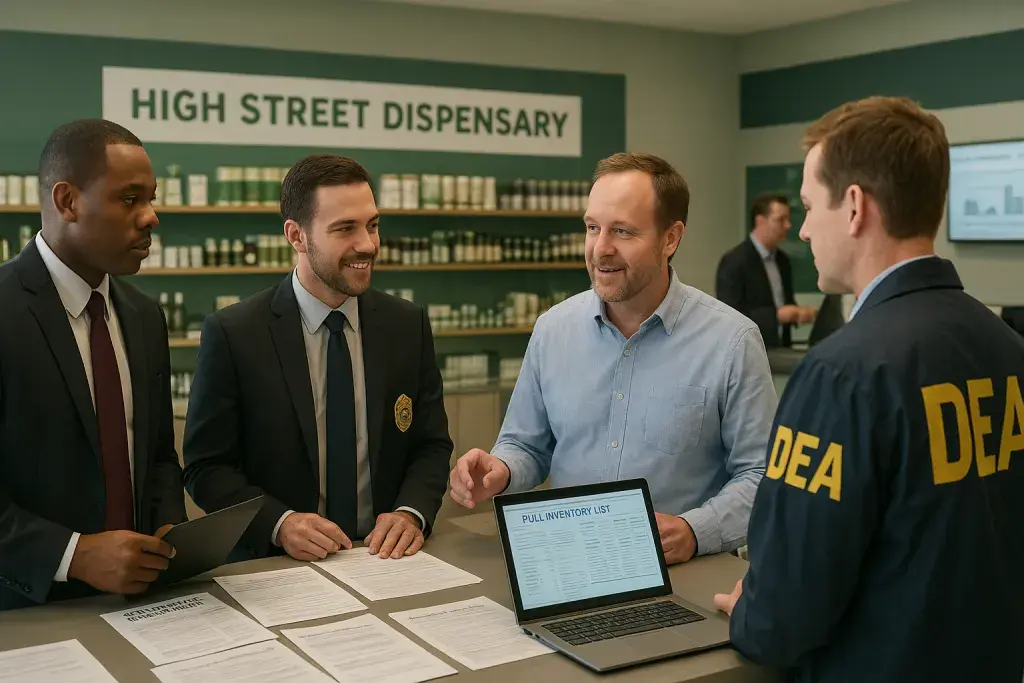
Federal agents are showing up at Mississippi medical marijuana dispensaries - and the visits are more collaborative than confrontational. The Drug Enforcement Administration has conducted on-site inspections at dispensaries that registered with the agency following Acting Attorney General Todd Blanche's order earlier this year reclassifying state-licensed medical cannabis products from Schedule I to Schedule III of the Controlled Substances Act. The Mississippi Medical Marijuana Association confirmed the visits to industry press last week, offering the first on-the-ground account of what federal registration actually looks like in practice.
Two 3MA member dispensaries - High Street Dispensary in Jackson and Legally Rooted in Meridian - received visits from teams of five to six DEA representatives each. The inspections weren't announced with a formal document checklist. Agents arrived, spent extended time on-site (roughly six hours at High Street Dispensary, according to owner David Fowler), and asked questions about general operations while requesting records on the spot. For operators accustomed to state-level METRC audits and seed-to-sale compliance reviews, the federal layer adds a new dimension to an already documentation-heavy business environment. State-regulated cannabis retailers in markets that have built out robust compliance infrastructure - think seed-to-sale tracking, real-time inventory reconciliation, and detailed employee credentialing - are better positioned to absorb this kind of scrutiny. Resources like pos cannabis alaska illustrate how point-of-sale and compliance systems in regulated markets are increasingly designed to surface exactly the kind of documentation federal or state auditors might request.
What agents actually asked for tells operators something useful. According to 3MA director Henry Crisler, the documentation requests during the visits included license transfer records, ownership information with Social Security numbers, full inventory lists, vendor lists, employee records, security plans, and METRC purchase history. That's a broad sweep - and the absence of a pre-visit checklist means operators had no opportunity to organize materials in advance. For multi-location operators or those with complex ownership structures, that's an operational exposure worth thinking through now, not after a federal knock at the door.
A Collaborative Tone - But Documentation Gaps Are Real Risks
To be fair, both dispensary operators described the visits as low-pressure. Fowler called the agents "very cordial" and said they did not approach the facility in an overbearing manner. Crisler characterized the overall posture as "collaborative and inquisitive." The DEA representatives reportedly acknowledged they were new to the process themselves, which tracks - Schedule III registration for cannabis is genuinely novel federal territory, and the agency is clearly working through its own procedures in real time.
That context matters, but it doesn't eliminate compliance risk. Cordial visits can still produce adverse findings if records are incomplete, ownership documentation is disorganized, or inventory logs don't reconcile cleanly with METRC data. Any dispensary that has gone through a state compliance inspection knows how quickly a cooperative conversation turns technical once an auditor starts cross-referencing purchase history against point-of-sale records. The federal layer doesn't change that dynamic - it extends it.
The Tax Angle Is the Real Business Driver
Fowler's comment about tax deductions is worth taking seriously. He specifically cited the benefits of Schedule III status as a motivator for registering, and he's right to flag it. Under current federal tax law, businesses trafficking in Schedule I or II controlled substances are subject to Section 280E of the Internal Revenue Code, which disallows standard business expense deductions. Rescheduling to Schedule III would, in principle, remove cannabis retailers from 280E's reach - allowing them to deduct ordinary operating expenses like payroll, rent, and cost of goods sold.
For a dispensary operating on tight margins in a regulated market, that's not an abstract policy question. It's the difference between a viable P&L and a punishing one. The prospect of tax relief is the single clearest financial incentive for operators to engage with the federal registration process, even if that engagement invites additional oversight. Here's the thing, though: the rescheduling process isn't final. A broader DEA administrative hearing is scheduled to begin later this month, and until rescheduling is fully formalized through that process, operators are registering into a regulatory framework that is still being constructed around them.
What Operators in Other States Should Watch
Mississippi's dispensaries may be among the first to receive DEA visits, but they won't be the last. The DEA has indicated it will release registration forms for additional business types - manufacturers, distributors, and laboratories - in the near term. That means the compliance footprint of federal registration will extend well beyond retail storefronts into the broader cannabis supply chain.
Operators in other medical cannabis states should treat Mississippi's experience as a preview. The documentation requests agents made - ownership records, vendor lists, employee files, METRC history - represent the minimum floor of what a federal inspection might require. Cannabis businesses that run lean on record-keeping or that have relied on informal compliance practices should close those gaps before registration becomes relevant to their own markets. The federal registration process is moving slowly, by the DEA's own apparent design. That pace is a window, not a guarantee.