
Richmond Pushes Bond Measure to Fix Fire Stations and Close Paramedic Gap
Authored by cannabiscanadabuzz.com, 01 Jul 2026
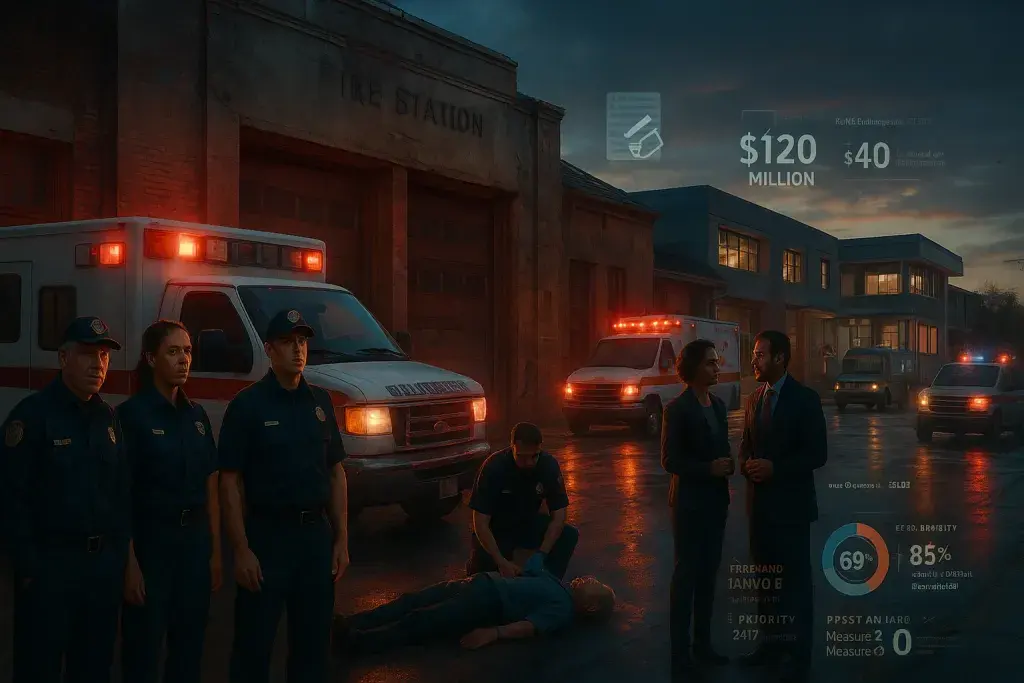
Richmond, California, stands as the only city in Contra Costa County whose fire department operates at a basic life support designation - meaning when a resident suffers a stroke, a cardiac event, or a serious traumatic injury, the first responders on scene are legally limited in the care they can deliver. A proposed November 2025 bond measure, which could generate roughly $120 million, aims to begin correcting that disparity by funding infrastructure overhauls across seven aging fire stations while setting the stage for an eventual upgrade to Advanced Life Support status.
The gap in emergency care isn't new. Contra Costa County Civil Grand Jury reports dating back to 2007 have repeatedly flagged Richmond's below-standard service level and recommended the department transition to ALS certification. What's new is the political momentum - and a voter survey suggesting the public may finally be ready to pay for it. In a May poll of 800 likely Richmond voters, 69% said they'd support a property bond measure pitched at an estimated $40 per $100,000 of assessed value, clearing the two-thirds supermajority threshold the measure would need to pass. The parallels to how other regulated service industries think about compliance investment are real: just as a New Jersey dispensary POS platform must meet baseline operational and regulatory standards before it can serve customers lawfully, a fire department's service designation determines the floor of care it's legally permitted to provide - and that floor, in Richmond's case, has been dangerously low for decades.
The bond funds, if approved, would be legally restricted to infrastructure spending: renovating sleeping quarters, replacing failing electrical systems, repairing leaky roofs and pipes, and reconstructing facilities that don't meet seismic standards. City officials and Councilmember Doria Robinson, who has long pushed for facility upgrades, have described conditions at some stations as "horrendous." That's not rhetorical excess - it's a description of what deferred maintenance looks like after years of insufficient capital investment in public safety infrastructure.
The ALS Problem Isn't Solved by Construction Alone
Here's the catch: bond proceeds can fix buildings, but they can't pay for paramedics. Transitioning the Richmond Fire Department from basic life support to Advanced Life Support certification requires a dedicated operational budget - salaries, training pipelines, equipment, and ongoing program administration. The department already employs around 10 certified paramedics within its 89-person workforce, but the BLS designation effectively sidelines their higher-level skills on scene. That's a significant resource sitting unused while residents wait for an ALS-certified agency to arrive.
Fire Chief Aaron Osorio has said the groundwork for an ALS program is laid, but without a firm budget commitment, he'd be forced to staff the program through attrition - a slow, uncertain path that doesn't match the urgency residents expressed in the polling data. Eighty-five percent of survey respondents ranked 24/7 paramedic emergency response as their top priority. That's a clear signal. Whether the general fund can carry the operational cost remains an open question the council hasn't answered.
A parcel tax - studied alongside the bond - showed softer but still meaningful support. About 64% of respondents said they'd back a $67 annual parcel tax specifically tied to paramedic services funding. The research firms advising the city recommended moving forward with the bond in November and revisiting the parcel tax in a future election cycle. The logic is straightforward: lead with the measure most likely to pass, build institutional trust, then return to voters for the operational funding piece.
What Other Tax Measures in the County Show
Richmond isn't starting from scratch in terms of precedent. Contra Costa County voters approved Measure X in 2020 - a half-cent sales tax generating roughly $120 million annually for medical services, fire, homelessness response, and safety net programs. In 2016, Measure O, a $251 annual parcel tax, funded operation of two fire stations for the Rodeo-Hercules Fire District before it was annexed into the Contra Costa County Fire Protection District in July 2025. Those measures passed. They demonstrate that county voters are not categorically opposed to taxing themselves for public safety infrastructure when the ask is specific and the case is made clearly.
The Richmond council has until early August 2025 to decide whether to place the bond measure on the November ballot. What's striking here is how long the underlying problem has been documented and deferred. Seventeen years of grand jury reports. Multiple failed program launches. A fire chief who has built the framework for an ALS program but can't fully staff it without a budget guarantee. The bond measure is, at best, step one of a two-step fix - and step two still has no funding locked in.
City Manager Shasa Curl told the council in June that the city is on "a very positive path forward." That may prove true. But in practice, a yes vote in November resolves the buildings problem. The paramedic problem - the one 85% of voters said matters most - still needs its own answer.